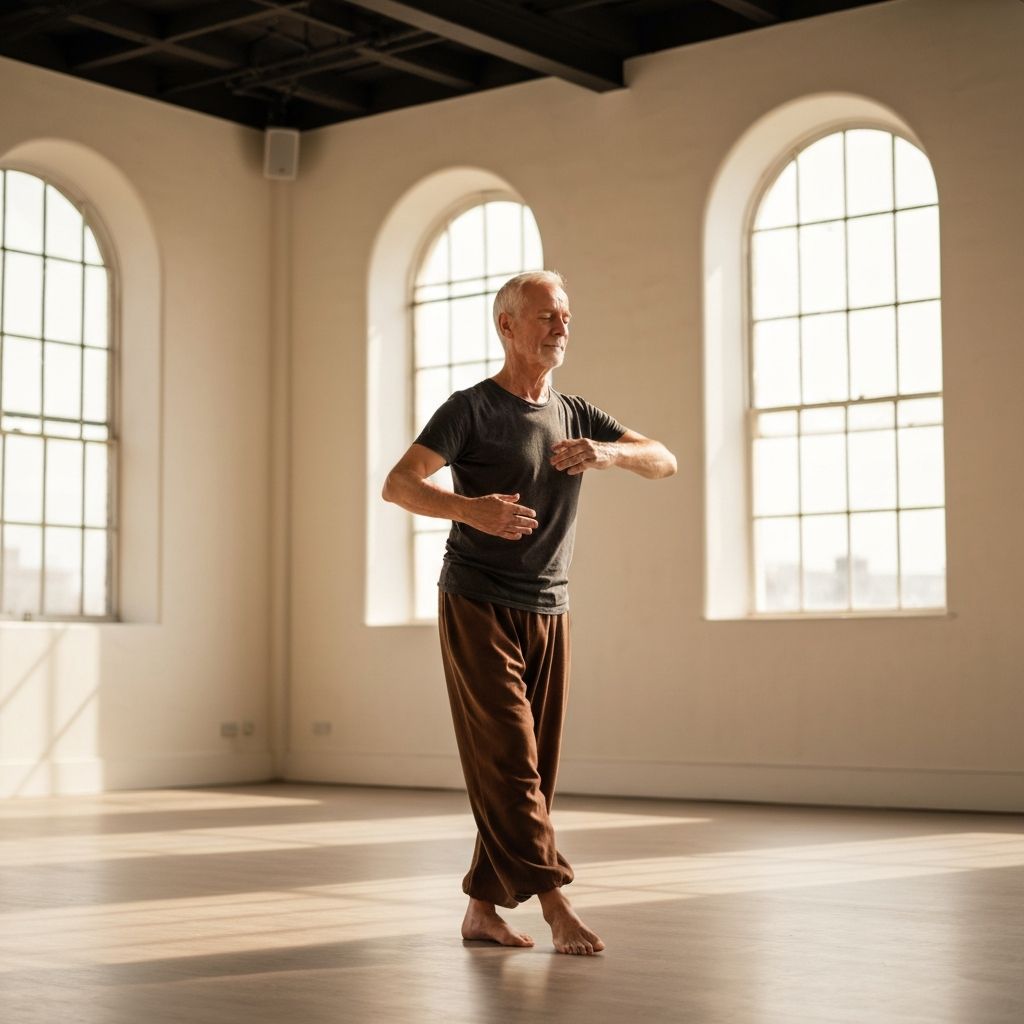
Foundation Principles
Principle 1: Body Awareness as Foundation
The first step in any meaningful movement practice is developing awareness of the body's position in space, the sensations within muscles and joints, and the quality of movement. This proprioceptive awareness enables conscious engagement with movement rather than habitual, unconscious motion.
Body awareness is cultivated through slow, deliberate practice with attention directed inward. This mindful engagement allows practitioners to recognize asymmetries, areas of restriction, and habitual patterns that may influence movement.
Principle 2: Progressive Development
Physical capabilities develop gradually through consistent engagement. Improvements in flexibility, strength, and mobility occur incrementally over weeks and months of practice rather than through sudden, dramatic changes.
Sustainable development requires respecting the body's current capacities while thoughtfully challenging them. The goal is consistent, manageable progress rather than forcing rapid advancement.
Principle 3: Respecting Structural Variation
All bodies possess individual structural characteristics determined by genetics, age, training history, and prior experience. These variations mean that identical practices will produce different results for different individuals.
Understanding and accepting these natural variations is essential. Rather than comparing to external standards, practitioners benefit from attention to their own baseline and their own gradual improvements.